


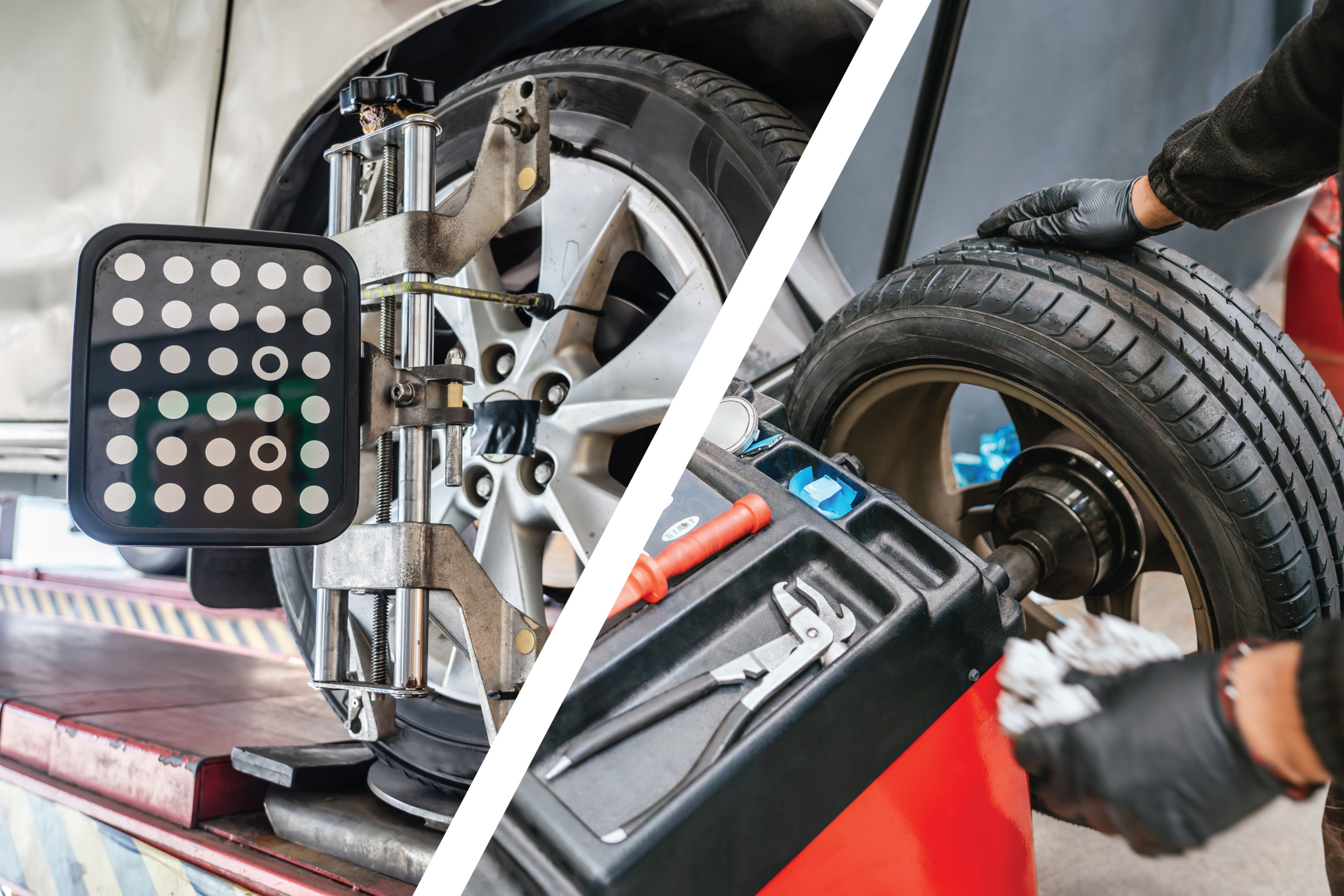

Driving across the UAE means long, high-speed highways, intense summer heat and the occasional surprise pothole or road debris. While these conditions are part of daily life from Dubai to Abu Dhabi, they can quietly impact your car’s performance and your fuel costs. If you’ve noticed your fuel efficiency dropping without a clear reason, your wheels might be the hidden culprit.
Understanding the difference between wheel alignment and wheel balancing isn’t just technical knowledge, it’s a smart way to protect your tires, improve car fuel efficiency and save money over time.
Summary:
- Core Function: Alignment adjusts the suspension geometry to keep wheels parallel; Balancing corrects weight distribution around the tire-wheel assembly.
- Primary Symptoms: Misalignment causes the vehicle to pull to one side; unbalance triggers vibrations in the steering wheel or floorboards at high speeds.
- Fuel Impact: Alignment issues increase rolling resistance, while unbalance leads to kinetic energy loss through vibration forcing the engine to consume more fuel.
- Environmental Stress: UAE-specific factors like extreme heat expansion and road debris accelerate the degradation of both alignment and balance settings.
- Maintenance Trigger: Professional service is recommended every 10,000 km, or immediately following a significant impact with a pothole or curb.
What is Wheel Alignment?
Wheel alignment is all about geometry. It involves adjusting your car’s suspension system so that the wheels are:
- Parallel to each other
- Perpendicular to the road surface
When your alignment is correct, your vehicle drives straight, your tyres wear evenly, and your steering feels precise.
Signs of Bad Wheel Alignment:
- Your car pulls to one side
- Uneven tire wear (a key uneven tire wear sign)
- Steering wheel is off-center when driving straight
In UAE conditions, especially with heat expansion and road irregularities, alignment issues can develop faster than you expect.
What is Wheel Balancing?
Wheel balancing is about mass distribution. It ensures that the weight of your tire and wheel assembly is evenly distributed.
Small imbalances, even a few grams, can cause noticeable issues, especially at highway speeds common across the UAE.
Signs You Need Wheel Balancing:
- Steering wheel vibration (especially at high speeds)
- Vibrations felt in seats or floor
- Uneven tire wear over time
If you’ve ever asked, “Why is my steering wheel vibrating?”, balancing is often the answer.
The Fuel Connection: Why It Matters
Both alignment and balancing directly affect your fuel efficiency.
When your wheels are misaligned:
- Tires don’t roll straight
- Increased rolling resistance forces the engine to work harder
When your wheels are unbalanced:
- Energy is lost through vibration
- Your car becomes less efficient at maintaining speed
The Result?
- Higher fuel consumption
- Faster tire wear
- Reduced overall performance
In a region where drivers frequently travel long distances, even small inefficiencies can add up quickly. Regular wheel balancing and alignment service is one of the simplest ways to improve car fuel efficiency.
Why Professional Service Matters
Modern vehicles require precision. Wheel alignment and balancing are not guesswork. They rely on advanced equipment and trained technicians.
At Saeedi Pro, services are performed using:
- Computerized alignment systems
- High-precision balancing machines
- Certified automotive specialists
This ensures your car is adjusted to exact manufacturer specifications, something essential for safety, tire longevity, and optimal fuel use.
If you’re searching for wheel alignment in Dubai, wheel balancing in the UAE, or the best wheel service center in Dubai, choosing a professional provider makes all the difference.
Next Steps: When Should You Check?
To keep your vehicle performing at its best:
- Check alignment every 10,000 km
- Inspect after hitting a pothole or curb
- Balance wheels whenever you install new tires or feel vibrations
Regular tire maintenance drivers can rely on isn’t just about safety; it’s a smart financial move in a demanding driving environment.
Final Thoughts
Wheel alignment is about precision geometry. Wheel balancing is about perfect weight distribution. Together, they play a critical role in your car’s safety, performance, and fuel efficiency.
If you’re noticing changes in handling, vibrations, or rising fuel costs, it may be time for a check-up.
Book Your Service Today
Visit Saeedi Pro for expert wheel balancing and alignment service across the UAE and keep your drive smooth, efficient, and cost-effective.
FAQs
1. How often should I get my wheels aligned and balanced?
It’s recommended every 10,000 km, or sooner if you notice symptoms like pulling or vibration.
2. Can I get these services done separately?
Yes. Alignment and balancing address different issues. However, they are often performed together for optimal results.
3. Does wheel balancing improve fuel economy?
Yes. By reducing vibration and energy loss, balancing helps your car operate more efficiently.
4. What is the main sign that my car needs alignment?
The most common sign is your car pulling to one side while driving straight.
5. Why do wheels go out of alignment in the UAE?
High temperatures, road expansion, speed bumps and occasional road hazards all contribute to faster misalignment.


