


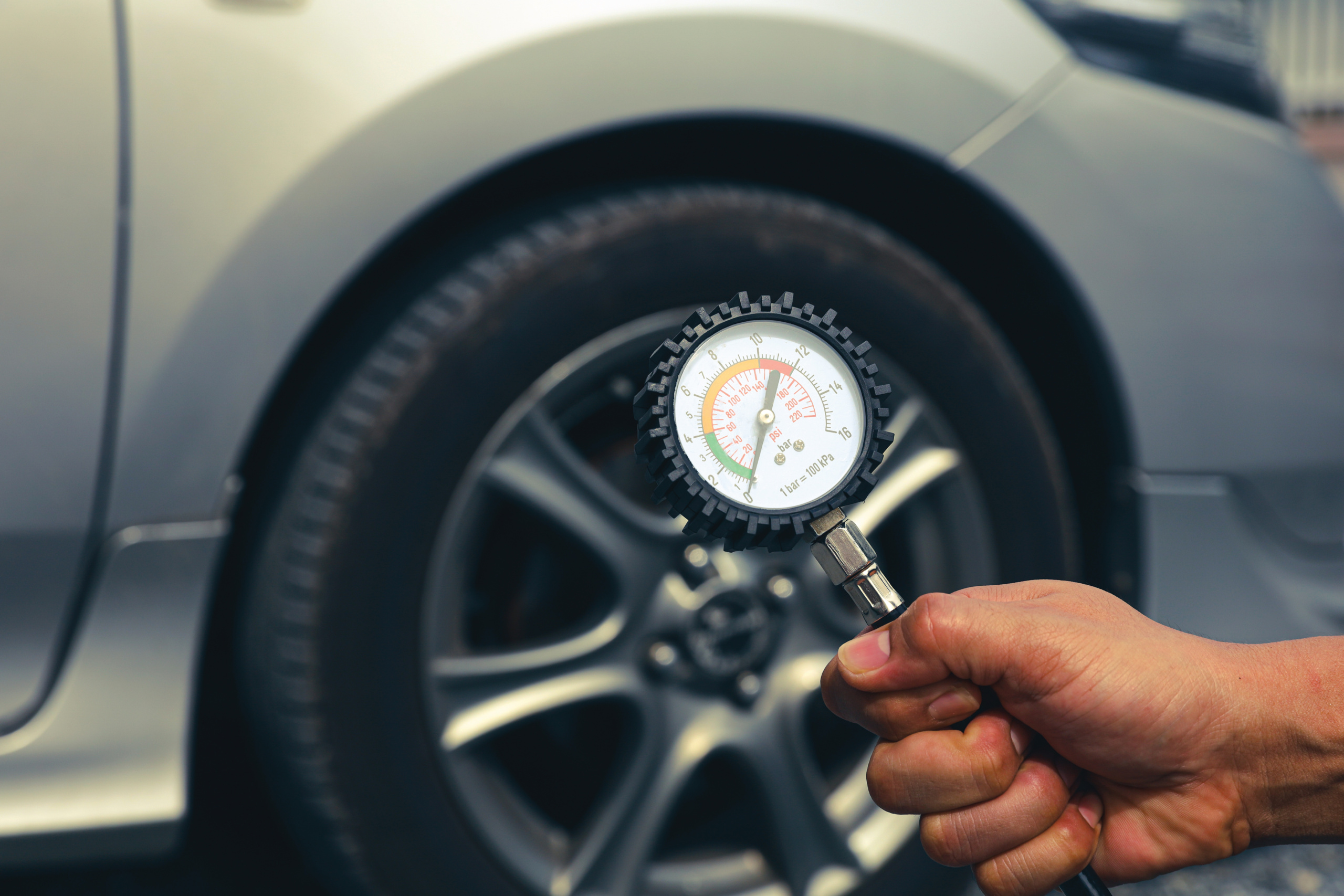

This is one of the most common questions we are asked at the counter every summer, so let us answer it honestly and in plain language. A blowout is when a tyre suddenly bursts and loses all its air while you are driving, and in the UAE the heat makes it far more likely. Nitrogen filling is often sold as the cure. The truthful answer is that nitrogen genuinely helps reduce the risk, but it is not a magic shield, and it is important you understand the difference so you do not end up with a false sense of safety on a long, hot drive. Let us walk through exactly what nitrogen can and cannot do.
Summary
- A blowout is a sudden tyre bursting while driving, usually caused by heat combined with low pressure.
- Nitrogen holds pressure more steadily in heat, which removes one major blowout trigger.
- It lowers the risk but does not replace healthy tyres and regular checks.
- Real protection is correct pressure and good tyres, with nitrogen as a helper.
- Steady pressure improves fuel economy by reducing rolling resistance on hot asphalt.
Why does summer cause tyre blowouts in the first place?
Because heat and low pressure work together to push a tyre past its limit. A tyre is really a strong container holding air under pressure, and it is that air, not the rubber, that carries your car. In summer, three things gang up on it: the air expands as it heats, the road itself can pass 70°C, and any existing weakness in the tyre gets pushed to breaking point.
The most common trigger by far is low pressure, because a soft tyre flexes more, and that flexing creates heat through friction until the structure fails. Picture bending a paperclip quickly back and forth until it grows hot. A soft tyre is doing that to its own rubber thousands of times a minute.
What is nitrogen and how is it different from normal air?
Here is the part that surprises people. The ordinary air you pump in at a petrol station is already about 78 percent nitrogen. The rest is mostly oxygen plus a little water vapour, which is just moisture. Nitrogen filling simply removes the oxygen and the moisture and leaves you with close to pure, dry nitrogen.
Those two ingredients, oxygen and water, are exactly the parts that react most to heat, so taking them out changes how the tyre behaves on a hot day. Our full comparison of nitrogen versus air goes deeper, but in short, nitrogen is the more stable, more predictable gas to have inside your tyres when temperatures soar. It is not exotic and it is not a chemical additive, it is simply cleaner, drier air with the reactive parts taken out.
How does nitrogen lower the risk of a blowout?
It attacks the main trigger, which is unstable pressure, in two ways. Neither is dramatic on its own, but both push the odds in your favour during a long, hot drive.
Does it hold pressure more steadily?
Yes. Because nitrogen reacts less to temperature change, your tyres stay closer to the correct pressure on a scorching day. Since low tyre pressure is the number one cause of heat blowouts, anything that keeps pressure where it should be is directly tackling the biggest risk factor of all. You start the drive at the right pressure and you stay nearer to it as the tyres heat up.
Does it keep the tyre cooler and drier inside?
Yes. Dry nitrogen carries almost no water vapour. Trapped moisture expands sharply when heated and adds to the pressure swings inside the tyre, so removing it helps the tyre run a little cooler and more predictably through a long summer drive. Less moisture also means less corrosion inside the wheel over the years, which is a quiet bonus.
What can nitrogen not do?
This is the honest bit that some shops leave out. Nitrogen will not save a tyre that is worn down, cracked with age or already damaged. It will not make up for never checking your pressure, because even nitrogen-filled tyres slowly lose air and need looking at from time to time.
And it certainly will not let you ignore a bulge in the sidewall or a tyre that is eight years old. Think of nitrogen as a good habit that supports the basics, not as a force field that lets you skip them. A perfect gas inside a worn-out tyre is still a worn-out tyre, and it will still fail if the rubber is past its safe life. Anyone who tells you nitrogen alone makes blowouts impossible is overselling it.
So what genuinely prevents a summer blowout?
A combination of simple habits, with nitrogen as one helpful part. Keep your tyres at the correct pressure, checked cold. Replace tyres that are worn or, in this climate, more than five to six years old, which you can check from the date code on the sidewall.
Keep the wheels aligned and balanced so tyres wear evenly, fit a working TPMS (Tyre Pressure Monitoring System) for early warnings, and yes, use nitrogen filling to hold it all steady. Do those things together and a summer blowout becomes very unlikely. Quality tyres built for heat, such as Nexen, make the whole job easier still.
Is nitrogen worth the cost for an average driver?
For most UAE drivers, yes, because it is an inexpensive way to make the most important safety factor, correct pressure, easier to maintain. You will not feel a dramatic difference from one drive to the next, but over a hot season you spend less time topping up and your tyres spend more time at their safe pressure.
The drivers who benefit most are those covering long highway distances, towing, carrying heavy loads, or simply prone to forgetting their pressure checks. If that sounds like you, nitrogen is a sensible, low-cost upgrade. If you are a careful, light city driver who checks pressures every fortnight, the benefit is smaller but still real, and it certainly does no harm.
Here is something worth knowing as a car owner. Every set of four tyres at Saeedi Pro comes with four services included at no extra cost: wheel balancing, wheel alignment, tyre rotation and nitrogen filling. That matters because a tyre is only as good as the way it is fitted and set up, and those four jobs are exactly what make a new tyre last and stay safe in the heat. It applies to every tyre brand we stock. You can see the current deals on our tyre offers page.
Frequently Asked Questions
Q: So does nitrogen prevent blowouts or not?
It reduces the risk by keeping pressure steady and the tyre cooler, but it does not prevent blowouts on its own. A worn or old tyre filled with nitrogen can still fail, so it works best as part of good tyre care rather than instead of it.
Q: Is nitrogen worth paying for if it is not a guarantee?
For most UAE drivers, yes. It is an inexpensive way to hold pressure more steadily through the heat, which is genuinely useful. Just keep up your regular checks as well.
Q: Can I still get a blowout with nitrogen-filled tyres?
Yes, if the tyre is worn, damaged, very old or badly under-inflated. Nitrogen lowers one risk factor, it does not remove all of them.
Q: How often should I check pressure on nitrogen tyres?
Every two to three weeks, and before long drives. Nitrogen leaks more slowly than air, so you check a little less often, but you should never stop checking entirely.
Q: Does nitrogen help an old tyre last longer?
Not meaningfully. Age and heat damage happen to the rubber itself, and no gas inside can reverse that. An old tyre should be replaced regardless of what it is filled with.
Q: Is nitrogen only worth it for fast or long-distance driving?
It helps everyone, but the benefit is greatest for long highway runs, heavy loads or towing, where heat builds up most. Light city drivers still benefit from steadier pressure between checks.


