



Here is something most drivers never realise: the part of your car that cools the cabin and the part that stops the engine overheating live right next to each other and often share the same fan. That means a struggling air conditioning system is sometimes the first sign that your engine cooling is in trouble too. In the UAE, where engine overheating is a real summer risk and an expensive one, that early warning is genuinely worth understanding. We will keep this simple and show you the exact pattern to take seriously.
Summary
- The A/C condenser and engine radiator sit together and often share a cooling fan.
- A blocked condenser or a failed fan can hurt both the A/C and engine cooling.
- Weak A/C combined with a rising temperature gauge is a serious warning.
- Treat a struggling A/C as a prompt to check the whole cooling system.
How are the A/C and engine cooling connected?
They share the same crowded space and often the same fan at the front of your car. Behind the grille sit two radiator-like parts stacked together. One is the radiator, which cools the engine’s coolant, the fluid that carries heat away from the engine. The other is the condenser, which does the same job for the air conditioning.
Both need air flowing through them to work, and on most cars one or two electric fans pull air through both at once. Because they share that space and that airflow, a problem affecting one can very easily affect the other, which is the whole point of this guide. The two systems are separate in what they cool, but they depend on the same airflow to do it.
What happens when the shared fan or airflow fails?
If the cooling fan that serves both parts weakens or fails, the A/C loses its cooling at idle and the engine loses some of its ability to keep cool at the same time. So the warm air from your vents and a creeping temperature gauge can have a single shared cause rather than being two separate faults, which is why a good technician checks both together.
Can one blockage hurt both systems?
Yes. Dust, sand and debris build up on the front of the car and can clog the condenser and radiator together, as they sit one behind the other. That blanket of grime traps heat, which makes the A/C weaker and the engine run hotter at the same time. Clearing it often helps both systems at once, which is a satisfying two-for-one fix and a cheap one.
What is the warning pattern to take seriously?
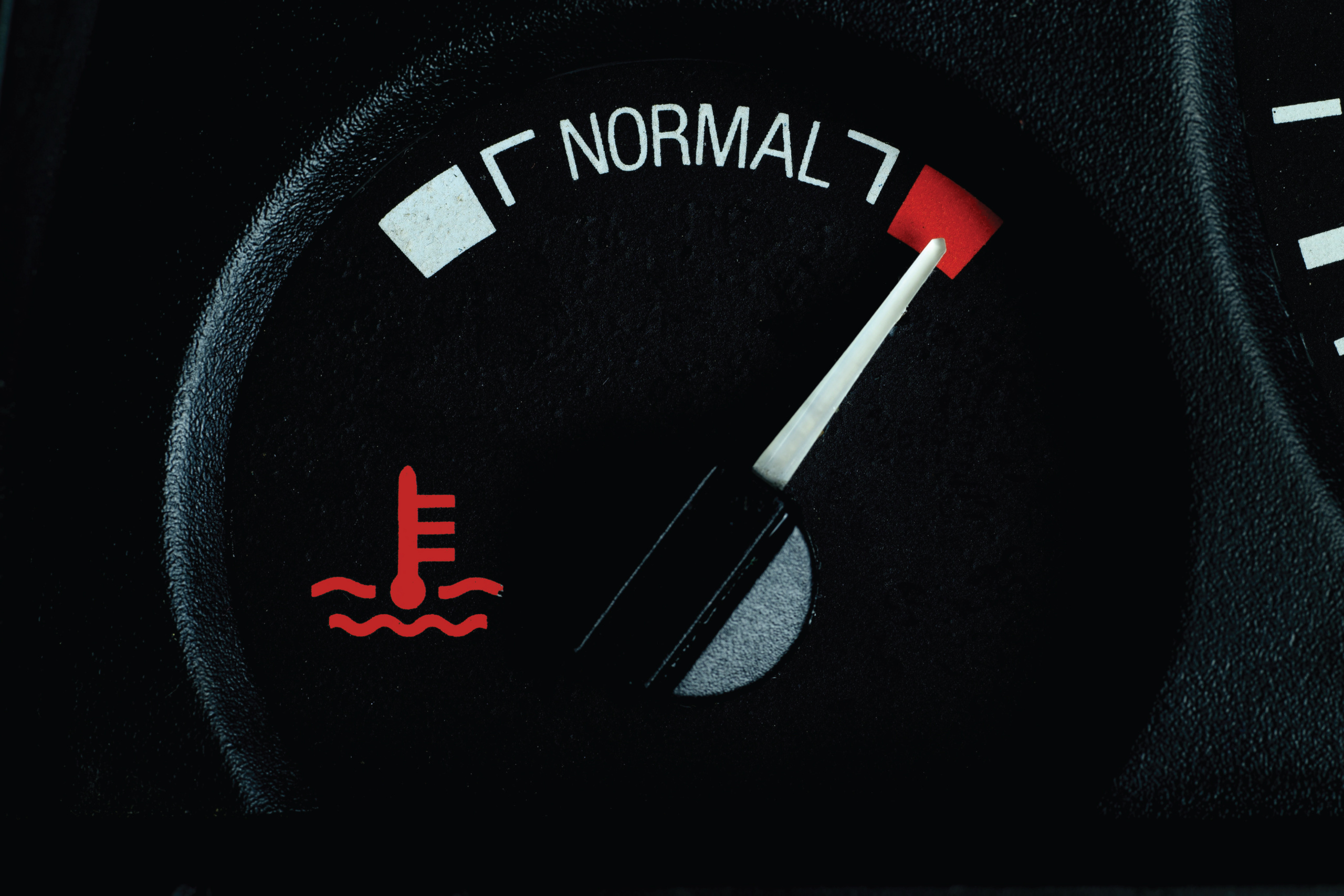
On its own, slightly weak A/C is usually just an A/C fault and nothing to panic about. But if you notice weak cooling at the same time as the engine temperature gauge climbing higher than normal, treat that combination as a genuine warning that the shared cooling is struggling.
Engine overheating can cause serious and expensive damage very quickly, far more costly than any A/C repair, and in the worst cases it can ruin an engine. So if the temperature gauge moves towards or into the red, the safe action is to pull over somewhere safe, switch off the engine and let it cool. Do not keep driving in the hope that it settles down on its own, because a few minutes of overheating can do lasting harm.
What should you do about it?
The lesson is simple: do not dismiss a struggling A/C in summer as merely an annoyance. Have the whole cooling system checked, the radiator, the coolant level and condition, the fans and the condenser, rather than just topping up the A/C gas and hoping the problem goes away.
We look at A/C and engine cooling together during car A/C repair and general car maintenance, because in our experience they so often share a cause. Keeping up with routine servicing, including your oil change and coolant checks, keeps the whole system healthy and reduces the chance of an overheating surprise on the hottest day of the year.
How can you prevent overheating before summer?
Prevention is mostly about keeping the cooling system clean, full and working. A short spring check covers the essentials and is far cheaper than dealing with an overheated engine later.
- Check the engine coolant level and have it flushed at the intervals your car recommends.
- Keep the front grille, radiator and condenser clear of dust, sand and debris.
- Have the cooling fans checked, since they serve both the engine and the A/C.
- Book a full A/C and cooling check in spring, before the worst heat arrives.
If you do all of that, you get a double reward: an A/C that stays cold through the summer, and a far lower risk of the engine overheating when you are stuck in traffic on a 45 degree afternoon. The two go hand in hand, which is exactly why a struggling A/C is worth taking seriously rather than tolerating.
Buy 4 tyres, get 4 services freeHere is something worth knowing as a car owner. Every set of four tyres at Saeedi Pro comes with four services included at no extra cost: wheel balancing, wheel alignment, tyre rotation and nitrogen filling. That matters because a tyre is only as good as the way it is fitted and set up, and those four jobs are exactly what make a new tyre last and stay safe in the heat. It applies to every tyre brand we stock. You can see the current deals on our tyre offers page.
Frequently Asked Questions
Q: Does a weak A/C always mean my engine will overheat?
No. Most of the time weak A/C is just an A/C fault. The warning sign to act on is weak cooling together with a rising engine temperature gauge, which suggests a shared cause in the cooling system.
Q: What should I do if the temperature gauge goes into the red?
Pull over somewhere safe as soon as you can, switch off the engine and let it cool down. Continuing to drive an overheating engine can cause serious and costly damage very quickly.
Q: How are the A/C and engine cooling connected?
Their main heat-shedding parts, the condenser and the radiator, sit together at the front of the car and usually share the cooling fans and airflow. A fault in that shared area can affect both at once.
Q: Can dust really cause both problems?
Yes. A build-up of dust and sand on the front of the car traps heat across both the condenser and radiator, weakening the A/C and making the engine run hotter. Clearing it can improve both.
Q: How often should the cooling system be checked in the UAE?
At least once a year, ideally in spring before the heat peaks, and any time the A/C weakens or the engine runs warmer than usual. Routine servicing keeps small issues from becoming breakdowns.
Q: Is it safe to keep using the A/C if the engine runs a little warm?
It is better to be cautious. The A/C adds heat load at the front of the car, so if the engine is already running warm, have the cooling system checked rather than risking it on a hot day.


You must be logged in to post a comment.