






































































Vehicle owners in Dubai and Abu Dhabi face a unique challenge: the extreme desert climate. While many drivers associate battery failure with winter, the 50°C summer heat in the Middle East is the primary cause of sudden battery death. High temperatures accelerate internal chemical reactions and fluid evaporation, often leaving drivers stranded without warning.
This guide provides direct, authoritative answers for those asking, “Why is my car not starting in the heat?” or “How do I check if my battery is dying?”
Key Takeaways:
- The 18-Month Threshold: In the UAE, car batteries typically last 18 to 24 months, significantly less than the global average.
- Evaporation Risk: Intense heat causes the electrolyte solution in lead-acid batteries to evaporate, resulting in permanent damage.
- Safety First: A swollen or bloated battery case is a critical safety hazard and must be replaced immediately.
- Voltage Standards: A healthy battery should read 12.6V when the engine is off. Anything below 12.2V indicates a failing cell.
- Strategic Parking: Parking in the shade can reduce under-hood temperatures by up to 15°C, preserving the life of your power cell.
5 Warning Signs Your Battery is Failing
If you are experiencing any of the following, your battery is likely reaching its end-of-life:
- The “Slow Crank” Ignition: The engine turns over sluggishly, sounding like it is “struggling” to wake up. This is a primary indicator of low voltage.
- Dimming Headlights and Electronics: If your headlights brighten when you rev the engine or your dashboard lights flicker at idle, the battery can no longer stabilise the electrical load.
- Physical Casing Deformity: Excessive heat causes the battery case to swell or look “fat.” If your battery looks bloated, it has been overcooked and is at risk of leaking.
- Pungent Odors: A “rotten egg” smell (sulfur) around the hood indicates the battery is venting gas due to internal short circuits or overcharging.
- Intermittent “Ghost” Faults: Modern SUVs like the Nissan Patrol or Toyota Land Cruiser may show random error codes for parking sensors or infotainment systems when battery voltage drops.
Benefits of Proactive Battery Replacement
Investing in a high-quality battery like PowerZone or an AGM (Absorbent Glass Mat) alternative offers specific benefits for regional drivers:
- Enhanced Reliability: Eliminates the risk of being stranded during the peak afternoon heat.
- Alternator Protection: A healthy battery prevents your alternator from overworking, saving you from more expensive repairs later.
- Optimised AC Performance: Strong voltage ensures your air conditioning’s cooling fans operate at maximum efficiency from the moment you start the car.
How to Choose the Best Battery for the UAE Climate
When choosing a replacement in the UAE, use these criteria to ensure longevity:
- Check the Reserve Capacity (RC): Higher RC values are better for handling the heavy electrical load of dual-AC systems and luxury electronics.
- Look for “Maintenance-Free”: Sealed batteries are preferred in the Gulf, as they prevent the rapid evaporation of internal fluids.
- Verify the Manufacturing Date: Do not buy a battery that has been sitting on a shelf for more than 6 months.
- Match the Technology: If your vehicle has a “Start-Stop” feature, you must use an EFB or AGM battery to prevent premature failure.
What to Expect During a Professional Battery Service
A reputable service center will follow a standardised 15-minute diagnostic process:
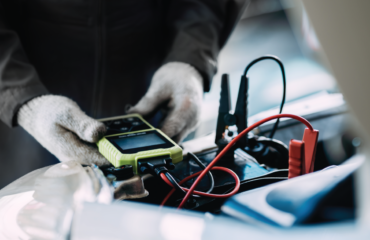
- Conductance Test: Measuring the State of Health (SOH) versus the battery’s rated capacity.
- Terminal Cleaning: Removing lead sulfate buildup to ensure a clean electrical connection.
- Charging System Audit: Verifying the alternator is outputting the correct voltage (typically 13.5V to 14.5V).
- Battery Registration: For modern European and Japanese cars, technicians use a diagnostic tool to reset the vehicle’s battery management system.
Conclusion
In the extreme desert climates of the UAE, your battery is your vehicle’s lifeline. While the 50°C heat is unavoidable, a breakdown isn’t. By recognising “slow cranks” or casing bulges early, you can replace a failing unit before it leaves you stranded.
Investing in high-heat-resistant technology like PowerZone or AGM batteries is the most effective way to ensure long-term reliability and protect your vehicle’s sensitive electronics.
Frequently Asked Questions (FAQs)
Can I jump-start a modern car safely?
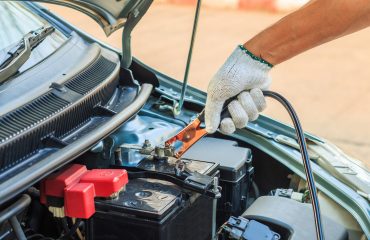
Yes, but always connect the positive (+) first and use a grounded metal point for the final negative (-) connection to avoid damaging sensitive onboard computers.
How often should I test my battery?
It is recommended to have a professional “load test” performed during every oil change once the battery is over 12 months old.
Why did my battery die after only one year?
Frequent short trips (under 20 minutes) prevent the alternator from fully recharging the battery. In the UAE heat, this leads to “acid stratification,” which rapidly degrades the battery’s internal components.




You must be logged in to post a comment.