


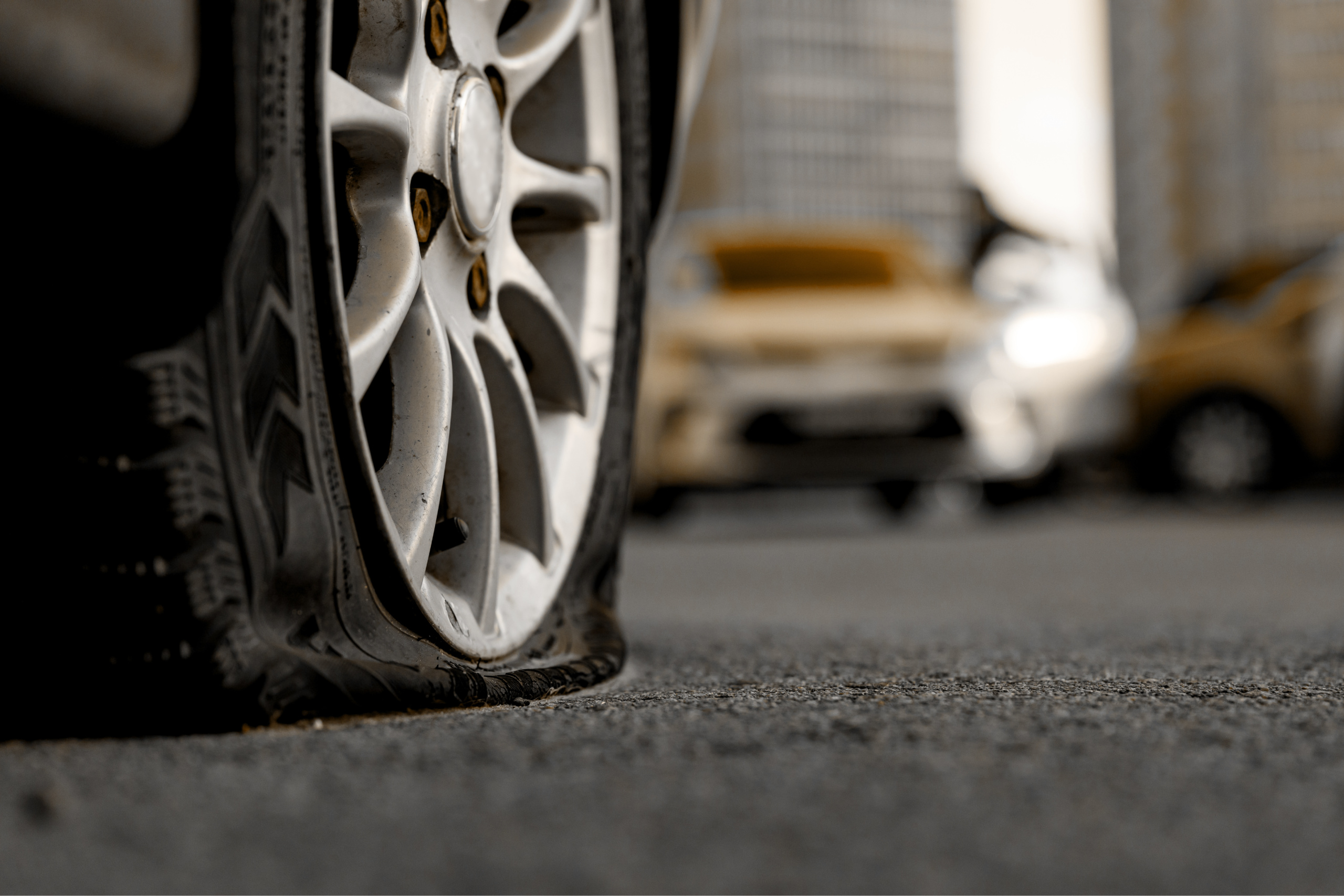

If you are new to looking after a car, the word blowout probably sounds alarming, and honestly it should be. A blowout is when a tyre suddenly bursts and loses all of its air while you are driving, usually with a loud bang and the car lurching to one side. We fit and inspect tyres every day across our UAE centres, and we can tell you that summer is by far the most common time for this to happen. Road surfaces here can climb past 70°C in the peak months, and that heat is the single thread that ties almost every summer blowout together. The reassuring part is that a blowout is rarely just bad luck. It is almost always the result of something you can check and prevent in a few minutes. This guide explains exactly why tyres fail in the heat and the simple habits that keep you safe, starting from the very basics so that nothing is assumed.
- Heat combined with under-inflation is the most common cause of summer blowouts.
- Worn, cracked or ageing tyres are far more likely to fail in extreme heat.
- Correct air pressure plus a quick monthly check prevent the vast majority of failures.
- A free tyre safety check takes minutes and could genuinely save your life.
What actually holds your car up, the rubber or the air?
It is the air, not the rubber. This surprises a lot of first-time owners, but the tyre is really just a strong, flexible container, and it is the air pressure inside it that carries the weight of your car. Picture a balloon that has to support a family saloon while spinning around a thousand times a minute on burning hot tarmac. That is the job your tyres do every single day in this climate.
When the air pressure is correct, the tyre keeps its proper shape and the car’s weight is spread evenly across the part that touches the road. That contact area, by the way, is surprisingly small. On each tyre it is only about the size of the palm of your hand. Four small patches of rubber are all that connect your car, and everyone in it, to the road, which is why keeping them in good condition matters so much.
When the air is low, the tyre goes soft, the shape distorts, and the rubber starts to flex far more than it was designed to. That flexing is where almost all summer trouble begins, because flexing makes heat, and heat is the enemy of any tyre.
What is the difference between a blowout and a slow puncture?
A slow puncture is a gradual leak, where a nail or a small object lets the air escape over hours or days, and you usually notice the tyre looking low or the pressure warning light coming on. A blowout is the opposite. It is sudden and complete, where the tyre structure fails all at once and the air escapes in an instant, often with a bang.
The reason this distinction matters is that a slow puncture gives you warning and time, while a blowout does not. The whole aim of summer tyre care is to catch the small problems, like a slow leak or a worn patch, before the heat turns them into a sudden failure at speed.
What actually causes a tyre to blow out in summer?
A blowout is a sudden failure of that air-filled container, and in summer three things stack on top of each other to cause it. First, the air inside expands as it heats up, so a tyre that is already low has to flex more with every single rotation, creating friction and heat inside the rubber. Second, the road itself is scorching, so the tyre is being heated from the outside at the same time. Third, any weak spot that already exists becomes the place where the structure finally lets go.
That weak spot might be a worn patch of tread, an old puncture repair, fine cracks in the sidewall, or simply old age. The important thing to understand is that heat does not usually create the weakness on its own. It finds the weakness that is already there and pushes it over the edge. So a healthy, correctly inflated tyre can handle our heat all day, while a tired one can fail in a single long drive on the motorway.
Why is low tyre pressure the single biggest risk?
Because low pressure is both the most common problem and the one that directly creates heat. A soft tyre puts more of its surface in contact with the road, which sounds harmless but means the rubber is constantly bending and rubbing as it rolls. On a long, hot motorway run the temperature inside that tyre keeps climbing until something gives way.
Here is a simple way to picture it. Bend a metal paperclip back and forth quickly and the bend gets warm, then hot. A soft tyre is doing the same thing to its own rubber thousands of times a minute. This is the part many UAE drivers get backwards. People assume that because heat makes air expand, they should let some air out in summer to be safe. In reality the opposite is true. A correctly inflated tyre flexes less and runs cooler, which is exactly what you want. Letting air out makes a blowout more likely, not less.
What are the warning signs of a tyre that might blow out?
You do not need to be a mechanic to spot a tyre that is heading for trouble. Walk around your car once a month, in daylight, and look for the following.
- Tread depth getting close to the legal minimum of 1.6mm. Tread is the grooved pattern on the part of the tyre that touches the road, and in the heat you want to replace well before you reach that limit.
- Cracks, bulges or blisters on the sidewall, which is the smooth side of the tyre. A bulge means the inside is already damaged and the tyre should be replaced without delay.
- Uneven wear, where one edge of the tyre is balder than the other. This usually points to a wheel alignment or balancing problem.
- Tyres more than five to six years old, even if they still look fine, because rubber hardens and weakens in this climate.
- A slow puncture you keep topping up, or one tyre that is always lower than the others.
If you are not sure how old your tyres are, every tyre has its date of manufacture stamped on the sidewall. We explain how to read it in our guide on how long a tyre can last, and it takes about ten seconds to check once you know where to look. Make this walk-around a habit at the start of every month, and certainly before any long drive.
How do you prevent a tyre blowout in the UAE heat?
The short answer is to keep your tyres correctly inflated, in good condition and not too old. Here is the simple routine we give every customer. Keep your tyres set to the pressure the car maker recommends, which you will find on a sticker inside the driver’s door or in the owner’s manual, and check it when the tyres are cold, before you have driven anywhere, because driving warms them and gives a false reading.
Beyond pressure, have your tyres rotated and the wheels aligned and balanced so they wear evenly, and consider nitrogen filling, which holds pressure more steadily as the temperature rises. A working tyre pressure monitoring system, the dashboard light that warns you when a tyre is low, gives you early notice before a slow leak becomes a failure. And when a tyre is worn or simply too old, replace it before the hottest months rather than gambling on it lasting one more season.
The tyre itself matters too. Modern premium tyres such as Nexen are designed to cope with high heat and long highway driving, which is exactly the punishment UAE roads hand out, so fitting quality rubber is part of staying safe rather than a luxury. If you are not certain what is right for your car, our team will talk you through the options without any pressure to overspend.
How often should you replace your tyres in the UAE?
Plan to replace tyres at around five to six years from their date of manufacture in this climate, even if the tread still looks healthy, and treat ten years as an absolute limit you should never reach here. That is shorter than in cooler countries, because our heat and sunlight age the rubber from the inside. Tread wear is only half the story, age is the other half, and both can end a tyre’s safe life.
What should you do if a tyre blows out while you are driving?
Stay calm and do not brake hard, because sudden braking after a blowout can throw the car out of control. Hold the steering wheel firmly with both hands and keep the car pointing straight. Lift your foot off the accelerator and let the car slow down gradually on its own, which feels counterintuitive but is the safest thing you can do.
Once the car has slowed to a safe speed, signal and steer gently onto the hard shoulder or as far off the road as you can. Switch on your hazard lights, get any passengers out on the side away from traffic, and call for help. If you are not comfortable changing the wheel at the roadside in the heat, our mobile tyre repair can come to you in many areas, so you do not have to crouch beside a busy motorway in 45 degree sun.
Here is something worth knowing as a car owner. Every set of four tyres at Saeedi Pro comes with four services included at no extra cost: wheel balancing, wheel alignment, tyre rotation and nitrogen filling. That matters because a tyre is only as good as the way it is fitted and set up, and those four jobs are exactly what make a new tyre last and stay safe in the heat. It applies to every tyre brand we stock. You can see the current deals on our tyre offers page.
Frequently Asked Questions
Q:Can a tyre blow out from heat alone?
Almost never on its own. A healthy tyre at the correct pressure can handle UAE heat all day. Blowouts happen when heat is combined with low pressure, worn tread or an old, hardened tyre, so heat is usually the trigger rather than the root cause.
Q: How often should I check my tyre pressure in summer?
At least once a fortnight, and always before a long drive. Do it in the morning before you set off, while the tyres are still cold, because that gives the most accurate reading.
Q: Are cheap part worn tyres a false economy in the UAE?
Usually yes. With a used tyre you cannot see internal damage or know its true age, and in this heat both of those matter far more than a slightly lower price. The small saving is rarely worth the risk.
Q: Does nitrogen really reduce the chance of a blowout?
It helps in a small but useful way. Nitrogen holds its pressure more steadily as temperatures swing, so your tyres stay closer to the correct, safer pressure for longer between checks. It supports the basics rather than replacing them.
Q: How long do tyres usually last in the UAE?
Plan for around five to six years from the date of manufacture in this climate, even if the tread still looks healthy, because heat and sunlight age the rubber from the inside. Ten years is an absolute maximum you should never reach here.
Q: Is it safe to keep driving on a tyre with a small sidewall crack?
Treat it with caution. Fine surface crazing is a sign of ageing, while a deeper crack or any bulge means the tyre is unsafe and should be replaced. When in doubt, have it inspected before a long drive.


