



































































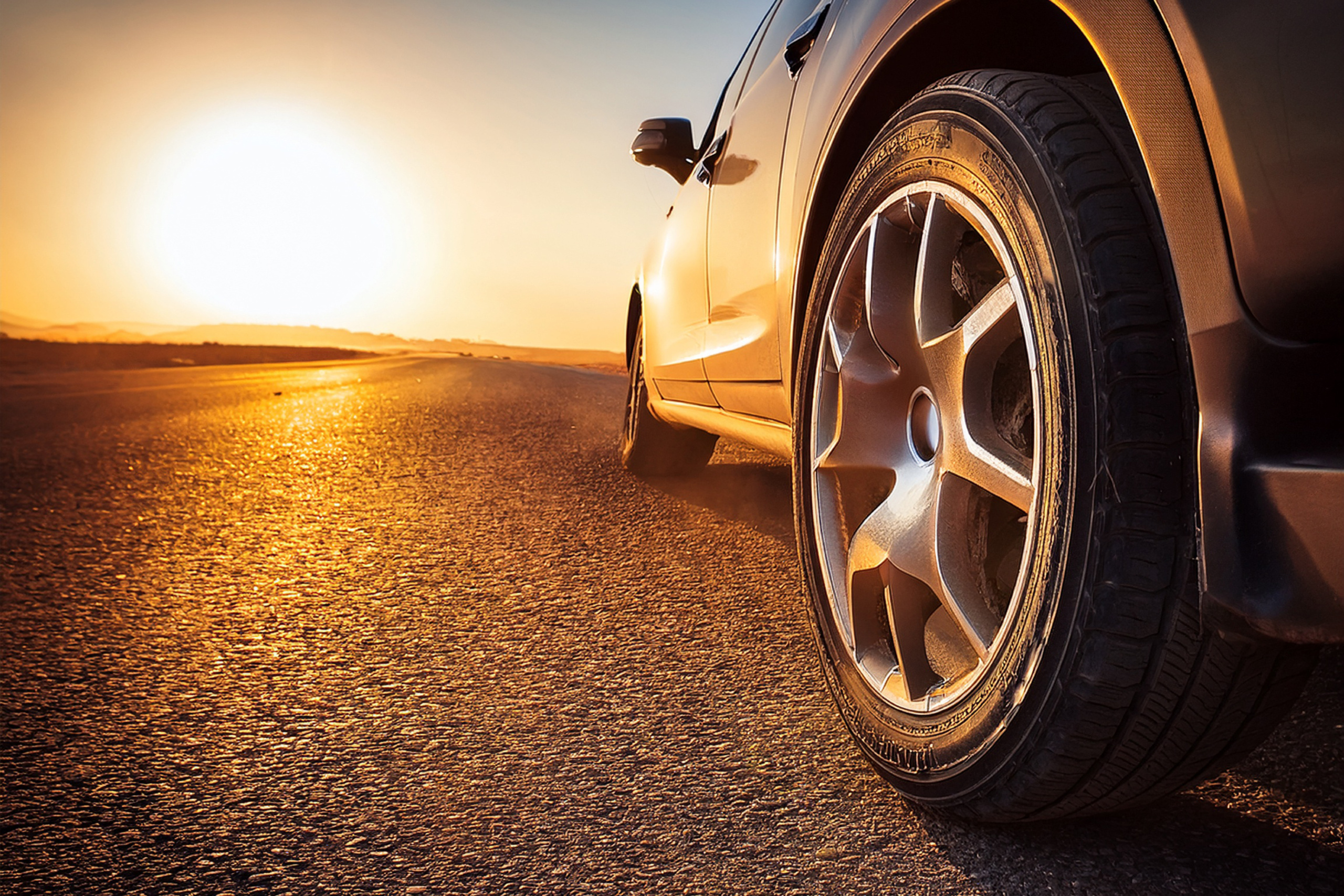

When people think of a worn-out tyre, they picture bald rubber with no tread left. In the UAE, though, a great many tyres are retired long before they go bald, because they are quietly worn out from the inside by relentless heat, ultraviolet light from the sun, and roads hot enough to fry an egg. If nobody has ever explained this to you, it can feel unfair that your tyres do not last as long as a friend’s in a cooler country. Once you understand what the heat is doing, you can spot the early warning signs and get the most safe life out of every set you buy.
- Heat and UV dry out the oils that keep tyre rubber soft and flexible.
- This causes cracking, hardening and a gradual loss of grip over time.
- The damage builds slowly and is often invisible until it becomes serious.
- Shade, correct pressure and timely replacement all extend tyre life.
Why does heat damage tyre rubber?
Because the heat dries out the very ingredients that keep rubber flexible. Tyre rubber is kept supple by oils and protective compounds blended into it during manufacture. They are what allow the tyre to flex thousands of times a minute and still grip the road.
Constant high temperatures speed up a process called oxidation, which slowly dries those oils out and hardens the rubber. A hard tyre grips less, runs hotter and cracks more easily. Because this all happens gradually and out of sight, most drivers never notice until cracks appear on the surface or, in the worst case, a tyre fails on the road at speed.
There is a useful comparison here. Think of how a fresh, soft eraser slowly turns hard and crumbly if left in a hot drawer for a couple of years. The rubber in your tyres goes through the same kind of change, only it is carrying your car at high speed when it does.
What does the sun’s UV do to your tyres?
Sunlight does its own damage on top of the heat. Strong ultraviolet light attacks the surface of the rubber, fading its colour and creating a network of fine cracks, often along the sidewall. You may hear this called crazing or perishing.
It is the same reason a plastic chair left outdoors goes brittle and chalky after a couple of summers. A tyre parked in direct sun for months ages noticeably faster than one driven daily but kept in the shade, which is why where you park matters as much as how you drive in this country.
How does hot tarmac affect your tyres?
The damage is not only from above. Road surfaces in a UAE summer can climb past 70°C, and driving on tarmac that hot for hours raises the temperature inside the tyre itself. If the pressure is also low, or the car is heavily loaded, the tyre runs hotter still, and that extra heat speeds up the wear and weakens the structure from within.
So a tyre faces heat from three directions at once in summer: the air temperature around it, the sun beating down on it, and the scorching road beneath it. Few environments in the world are as hard on rubber, which is why tyre life is genuinely shorter here than in cooler countries.
What are the warning signs of heat-damaged tyres?
You can catch most heat damage early with a quick look around the car every few weeks. Keep an eye out for these.
- Fine cracks or a crazed, crackled texture on the sidewall and between the tread blocks.
- Rubber that looks faded or grey, or feels noticeably hard rather than slightly springy.
- Any bulge or blister on the side of the tyre, which signals internal damage and needs immediate attention.
- A new vibration or rumble while driving that was not there before.
None of these requires a workshop to spot, just a couple of minutes and a bit of daylight. If you find any of them, especially a bulge, do not put off having the tyre looked at, because these are the tyres most likely to fail when the heat peaks.
How can you make your tyres last longer in the heat?
You cannot change the climate, but you can do a great deal to extend tyre life. Park in shade or a basement whenever you can. Keep your tyres at the correct pressure so they run as cool as possible. Avoid overloading the car. Have the wheels rotated, balanced and aligned regularly so the tyres wear evenly, and consider nitrogen filling to hold pressure steady through the heat.
Most importantly, judge your tyres by age as well as tread, because a hard, aged tyre is unsafe long before it is bald. If you are unsure how old yours are, it is worth learning to read the date code stamped on the side, and our guide to how long a tyre can last explains when it is time to act. When replacement day comes, heat-tolerant premium tyres such as Nexen are engineered for exactly these conditions, which is why they cope so well on UAE roads.
Does where you park really make that much difference?
Yes, more than most people expect. Two identical cars, one kept in a shaded basement and one left in an open car park all summer, will show very different tyre ageing after a few years. The car in the sun will have more sidewall cracking, harder rubber and a shorter safe tyre life, simply from where it spent its time.
So if you have a choice between a sunny space and a shaded or covered one, the shaded one is genuinely looking after your tyres, your battery and your paintwork all at once. It is one of the easiest free upgrades you can give your car in this climate.
Here is something worth knowing as a car owner. Every set of four tyres at Saeedi Pro comes with four services included at no extra cost: wheel balancing, wheel alignment, tyre rotation and nitrogen filling. That matters because a tyre is only as good as the way it is fitted and set up, and those four jobs are exactly what make a new tyre last and stay safe in the heat. It applies to every tyre brand we stock. You can see the current deals on our tyre offers page.
Frequently Asked Questions
Q: Can heat damage a tyre that is barely driven?
Yes, and this catches many people out. Ageing from heat and sunlight happens whether or not the tyre is used, which is why the manufacture date matters just as much as the tread depth.
Q: Are cracks on the sidewall always dangerous?
Very fine surface crazing may be cosmetic at first, but it is a clear sign the rubber is ageing. Deeper or spreading cracks mean the tyre should be inspected and, in most cases, replaced without delay.
Q: Does tyre shine or dressing protect against the sun?
Some products help the tyre look better and may offer a little surface protection, but they are no substitute for the things that genuinely matter: shade, correct pressure and replacing tyres on time.
Q: Why do my tyres seem to wear out faster than they did abroad?
Because the UAE’s combination of heat, sunlight and road temperatures is among the harshest environments for tyres anywhere in the world. It is normal for tyres to have a shorter usable life here.
Q: How can I tell if heat has weakened a tyre on the inside?
Often you cannot by eye alone, which is the difficult part. The reliable guide is a combination of the tyre’s age, its history, and a professional inspection, so if in doubt, have it checked.
Q: Does parking in the shade really make a difference?
Yes, a meaningful one. Direct sun adds UV damage and pushes up the rubber’s temperature, so a car kept in shade or a basement ages its tyres more slowly than one parked in the open all day.