


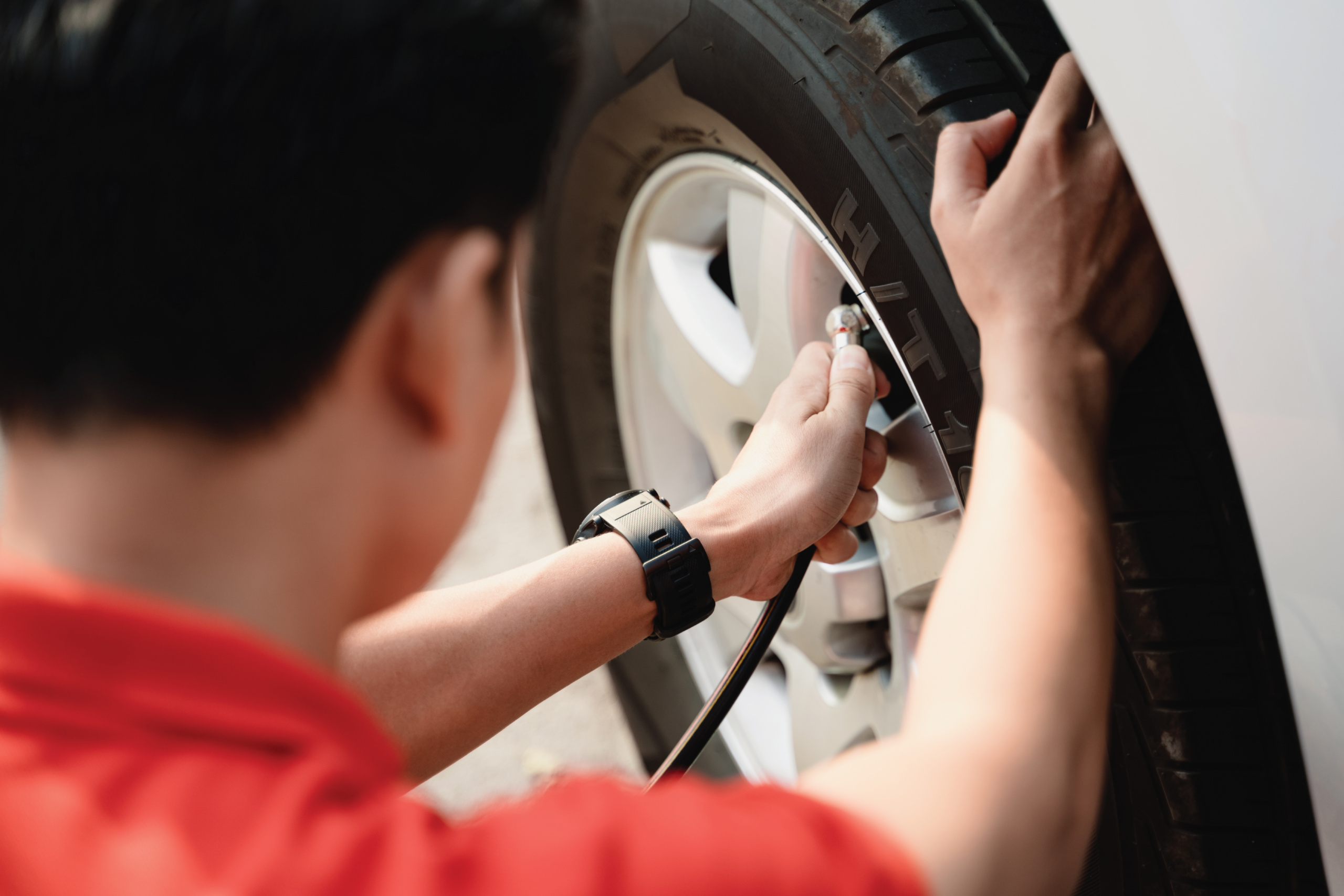

A tyre failing at city speed is frightening. A tyre failing at 120 km/h on Sheikh Zayed Road is genuinely dangerous, and summer is when it is most likely to happen. The reassuring news, and we promise this is true, is that almost every highway blowout can be prevented by a simple check that takes about ten minutes a month. You do not need any tools or experience. This is the exact checklist we would run on our own family cars before the heat sets in, explained step by step so anyone can follow it, whether you have owned cars for decades or you are checking your tyres for the very first time.
- Check pressure cold, plus tread depth, age and overall condition.
- A blowout at highway speed is preventable with a ten-minute monthly check.
- Do not forget the spare, the alignment and the wheel balancing.
- If anything looks doubtful, get a free professional inspection.
Why is a blowout so dangerous at highway speed?
Because speed multiplies both the heat and the danger. The faster a tyre spins, the more heat it generates through flexing, and the less time you have to react if it fails. At 120 km/h a sudden burst can pull the car hard to one side in an instant, often before you have even understood what has happened.
That is why prevention matters so much more than knowing how to react. Get the checks right and you almost never have to test your reactions at all. The ten minutes you spend in the car park is the safest ten minutes of your whole journey, and it is entirely within your control.
What is on the summer tyre safety checklist?
Seven quick checks cover almost everything that causes a summer tyre failure. Work through them once a month and they soon become second nature.
1. Is your tyre pressure correct and checked cold?
This is the single most important check. Set each tyre to the pressure on the sticker inside your driver’s door, and do it when the tyres are cold, before you have driven, because driving warms them and gives a falsely high reading. Never let air out to cope with the heat, as that does the opposite of what you want and leaves the tyre soft.
2. Is there enough tread depth?
Tread is the grooved pattern that grips the road and channels away water. The legal minimum is 1.6mm, but in the heat you want to replace before you reach it. Most tyres have small raised bars set into the grooves, called wear indicators, and if the tread is worn level with them, the tyre is finished and must be replaced.
3. How old are the tyres?
Even with good tread, rubber hardens and weakens with age in this climate. Check the four-digit date code on the sidewall and plan to replace tyres at around five to six years old, regardless of how much tread remains, because age is an invisible risk that tread depth does not reveal.
4. Is there any visible damage?
Look over each tyre for cracks, bulges or blisters on the sidewall, and for nails, screws or stones stuck in the tread. A bulge means the inside is already damaged and the tyre should be replaced without delay, as it is one of the most likely tyres to blow out in the heat.
5. Is the spare wheel ready?
The one everybody forgets. Check the spare is present, properly inflated and not too old, because the day you need it is the worst possible time to find it flat or perished. If your car has a repair kit instead of a spare, check that it is present and within its use-by date.
6. Are the wheels aligned and balanced?
If the car pulls to one side or the steering wheel shakes at speed, your wheels may need alignment or balancing. Both cause uneven wear, which creates weak spots that are more likely to fail in the heat, and both also waste fuel and make the car less comfortable.
7. Is your TPMS working, and would nitrogen help?
Make sure your tyre pressure monitoring system, the dashboard low-pressure warning, is working and not showing a fault. Consider nitrogen filling to hold pressure steadier through the summer, so your tyres drift out of their safe range more slowly between your monthly checks.
How often should you run this checklist?
Once a month is the habit to build, plus a quick check before any long drive such as a summer road trip. It really does take about ten minutes, and it is the cheapest safety insurance you will ever buy. Pick a fixed day, perhaps the first of the month, so it becomes automatic rather than something you have to remember.
If anything on the list looks doubtful, do not gamble on it lasting until the next check. Have it looked at, because the whole point of the checklist is to catch problems while they are still cheap and harmless rather than after they have become dangerous at speed.
Can you do all of these checks yourself?
Most of them, yes. Pressure, tread, age, visible damage and the spare are all things any driver can check in a car park with nothing more than a pressure gauge and a few minutes. They are genuinely simple once you have done them once.
Alignment and balancing are the two that need a workshop, because they require machines to measure and correct. The good news is that you do not have to diagnose them yourself, you only need to notice the symptoms, a pull to one side or a vibration through the wheel, and bring the car in. If you would rather have the whole list checked professionally, we are happy to do it for you free of charge.
Here is something worth knowing as a car owner. Every set of four tyres at Saeedi Pro comes with four services included at no extra cost: wheel balancing, wheel alignment, tyre rotation and nitrogen filling. That matters because a tyre is only as good as the way it is fitted and set up, and those four jobs are exactly what make a new tyre last and stay safe in the heat. It applies to every tyre brand we stock. You can see the current deals on our tyre offers page.
Frequently Asked Questions
Q: How do I check tread depth without a tool?
Look for the small raised bars set into the tread grooves, called wear indicators. If the surrounding tread is worn down level with them, the tyre has reached its limit and needs replacing.
Q: How often should I do a full tyre check in summer?
Once a month as a routine, and always before a long drive. The whole thing takes around ten minutes and prevents the vast majority of summer tyre failures.
Q: What is the most common cause of a highway blowout?
Low tyre pressure combined with heat. A soft tyre flexes and overheats at speed until it fails, which is why the cold pressure check is the most important item on the list.
Q: Should I check the spare tyre too?
Always. A spare slowly loses pressure and ages just like the others, so it can be useless when you finally need it. Make it part of every monthly check.
Q: My steering wheel vibrates at high speed. Is that a tyre problem?
Often yes. It usually points to a wheel balancing issue, and sometimes alignment. Both wear tyres unevenly and are worth checking, as uneven wear raises the risk of failure in the heat.
Q: Is it safe to repair a punctured tyre or should I replace it?
A small puncture in the central tread can often be safely repaired, but damage to the sidewall cannot. Have it inspected, as a proper repair is safe while a bodged one is a real risk at speed.


