


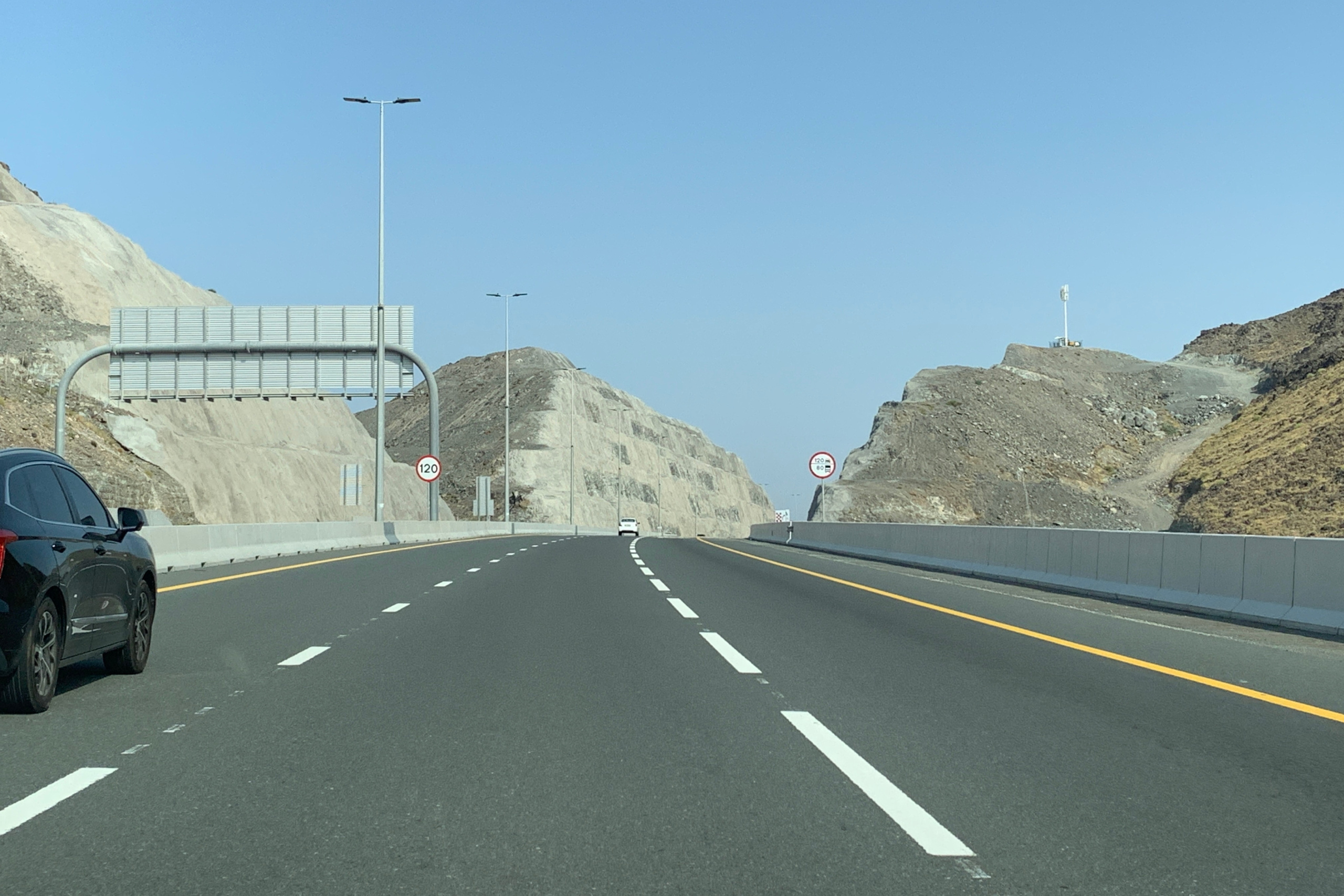

A summer drive to Hatta, across the border into Oman, or all the way down to Salalah is one of the great pleasures of living in this part of the world. It is also one of the toughest things you can ask of a car, and if you have never prepared a vehicle for a long hot-weather trip before, a quick glance over the bonnet is not enough. The heat, the distance and the occasional rough track all add up. This is the checklist we would run through for our own families before setting off, explained so that a first-time road tripper can follow every step with confidence and arrive relaxed rather than rescued.
- Check your tyre pressure, tread and age before any long summer drive.
- Make sure the AC, engine coolant and battery are all summer-ready.
- Match your tyres to the terrain if you plan any off-road sections.
- Carry plenty of water, a working spare wheel and a basic recovery kit.
Why should you check the tyres first?
Because long, hot motorway runs are exactly the conditions in which tyres fail, so this is where we always begin. Before you leave, check the pressures while the tyres are cold, and if the car is loaded with passengers and luggage, use the higher laden pressure listed on your door sticker rather than the everyday figure, because the extra weight needs the extra support.
Look across the tread for even wear, and inspect the sidewalls for any cracks, bulges or stones wedged in the grooves. Then check the spare wheel, which most people forget, making sure it is present, properly inflated and not too old to trust. If your route includes sand or rough tracks, the right 4×4 all terrain tyres or SUV tyres make a genuine difference to both safety and grip, and are worth fitting before rather than after you get stuck.
What should you check under the bonnet?
Focus on the two systems that work hardest in summer: cooling and the battery. Check that the coolant, the fluid that stops the engine overheating, is at the right level and not leaking, and have it topped up or flushed if it is due. Make sure the AC is blowing properly cold before you commit to hours in the car, because there is nothing worse than discovering it is weak an hour into the desert with the family aboard.
Have the battery tested too. Heat is what kills batteries here, and they often fail with little warning, usually at the least convenient moment far from help. A two-minute test before you leave is far better than a jump start in the middle of nowhere. While you are at it, check the engine oil, the windscreen washer fluid and that all your lights work.
What does each route demand?
What to expect driving to Hatta and the mountains
Expect steep climbs and long descents. Good brakes and correct tyre pressure really matter on gradients, and on the way down it is wise to shift to a lower gear so the engine helps slow the car rather than relying on the brakes alone, which can overheat them. The cooler mountain air is no reason to skip your checks before you set off.
What to prepare before driving into Oman
Carry your documents and make sure your car insurance includes Oman cover, as standard UAE policies often do not extend across the border. Plan for long stretches with few petrol stations, and fill up before remote sections rather than gambling on the next town having fuel. Keep some local currency and your vehicle registration handy for the border crossing.
What to know about the long haul to Salalah
This is a serious distance, not an afternoon out. Break the journey into stages, rest properly so you stay alert, and recheck your tyres and fluids at your stops. Tiredness is as much a safety issue on a long summer drive as anything mechanical, so share the driving if you can and stop the moment you feel drowsy.
What should you keep in the car?
- Plenty of drinking water for every passenger, well beyond what you think you will need, in case of a delay in the heat.
- A correctly inflated spare wheel, a jack and a wheel brace, and the knowledge of where they live in your car.
- Basic tools, a portable tyre inflator, and a torch and first aid kit.
- A phone charger and offline maps downloaded in advance, for the long gaps with no signal.
If you do pick up a puncture far from a workshop, our mobile tyre repair can reach you in many areas across the UAE, which is reassuring on a long trip. Save the number in your phone before you set off, alongside your insurer’s recovery line.
When is the best time of day to set off in summer?
Early morning is ideal. Setting off at first light means you cover the most ground before the worst of the afternoon heat, your tyres and engine run cooler, and you are more alert than you would be in the drowsy heat of midday. It also leaves a margin of daylight if anything delays you.
Try to avoid long stretches of driving in the peak afternoon hours, when both the car and the driver are under the most strain. If you must drive then, keep the AC sensible, watch your temperature gauge, and take more frequent breaks in the shade.
Here is something worth knowing as a car owner. Every set of four tyres at Saeedi Pro comes with four services included at no extra cost: wheel balancing, wheel alignment, tyre rotation and nitrogen filling. That matters because a tyre is only as good as the way it is fitted and set up, and those four jobs are exactly what make a new tyre last and stay safe in the heat. It applies to every tyre brand we stock. You can see the current deals on our tyre offers page.
Frequently Asked Questions
Q: Should I raise my tyre pressure for a fully loaded car?
Yes. Use the laden pressure listed on your door sticker, which is higher than the everyday figure and accounts for the extra weight of passengers and luggage. Reset it to normal once the trip is over.
Q: Do I need special tyres for Hatta or light off-road driving?
For mostly tarmac with the odd light track, a good set of all terrain or SUV tyres is usually plenty. Deep sand is a different challenge that needs proper preparation and some experience.
Q: How do I prepare my tyres for driving on sand?
You temporarily lower the pressure so the tyre spreads out and floats on the surface rather than digging in. The crucial part is reinflating before you return to tarmac, so always carry a portable inflator.
Q: Is it safe to drive long distances in peak summer heat?
Yes, with a well-prepared car and sensible habits. Travel early in the day when you can, rest often, keep everyone hydrated, and keep an eye on your temperature gauges throughout.
Q: What happens if I get a puncture far from any garage?
This is why a usable spare and a portable inflator are non-negotiable on a long trip. Beyond that, our mobile tyre repair service can come out to you in many areas, so you are not left stranded.
Q: How do I stop my brakes overheating on long descents?
Shift into a lower gear so the engine helps slow the car, a technique called engine braking, rather than holding the brakes all the way down. This keeps the brakes cooler and more effective.


