



































































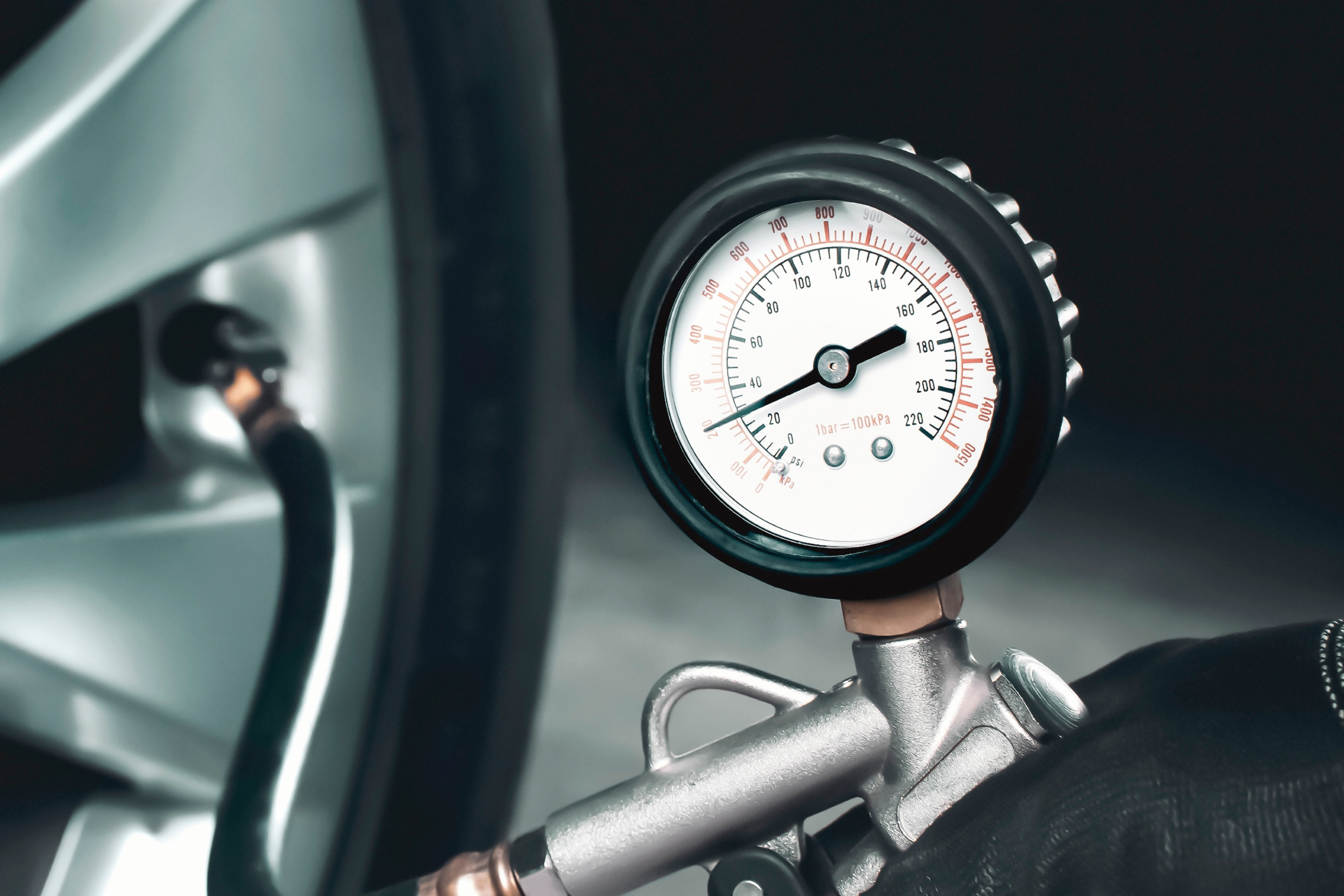

There is a piece of advice that does the rounds every UAE summer, usually passed on with great confidence: let some air out of your tyres so they do not burst in the heat. We hear it at the counter all the time, and we need to be very clear, because it is one of the most dangerous myths in motoring. Letting air out makes a blowout more likely, not less. If you have never thought much about tyre pressure before, this guide will explain what it is, what the right number is, how the heat affects it, and exactly how to check it properly, in plain language and with no assumptions about what you already know.
- Always inflate to the car maker’s recommended pressure, never below it.
- Set and check pressure when the tyres are cold, ideally first thing in the morning.
- Heat naturally raises pressure on its own, and the recommended figure already allows for that.
- Check every two weeks and before any long summer drive.
What does tyre pressure actually mean?
Tyre pressure is simply how much air is packed inside the tyre, measured in a unit called psi, which stands for pounds per square inch. You do not need to remember the science behind it. All you need to know is that the air is what holds your car up, and there is a correct amount for your specific vehicle.
Too little air and the tyre goes soft, flexes too much and overheats. Too much air and it goes hard, grips less and wears unevenly down the middle of the tread. The car makers have already worked out the ideal figure for your model, taking into account its weight and how it is used, so your only real job is to keep the tyres at that number.
It helps to think of pressure like the firmness of a football. A properly inflated ball bounces predictably and keeps its shape. A soft one flops and drags. Your tyres behave the same way, and a soft tyre dragging on hot tarmac is exactly the recipe for a summer failure.
Should you let air out of your tyres in summer?
No, and this is the most important point in the whole guide. The myth comes from a reasonable sounding idea: hot air expands, so surely a fuller tyre is closer to bursting. In reality the recommended pressure already accounts for the air heating up as you drive, so there is no need to compensate for it yourself.
When you deliberately let air out, you leave the tyre soft, and a soft tyre flexes far more against the road. That flexing creates heat through friction, and heat is the real cause of summer blowouts. So the well-meaning attempt to prevent a burst actually creates the exact condition that leads to one. A correctly inflated tyre runs cooler and is the safer choice in summer, every single time. If you remember nothing else, remember that low pressure is the danger, not high pressure.
What tyre pressure should you run in the UAE?
Use the figure the car maker recommends, not a number you have heard from a friend. You will find it on a small sticker, usually inside the driver’s door frame, sometimes inside the fuel flap or in the owner’s manual. It will often list two numbers, a normal figure and a higher laden figure for when the car is fully loaded with passengers and luggage.
Most UAE family cars sit somewhere around 32 to 35 psi, but please use your own car’s sticker rather than that general range, because it varies a lot between vehicles. A small hatchback, a large SUV and a loaded people-carrier all need different pressures, and getting it right for your car is what keeps it safe and efficient. If you cannot find the sticker, the owner’s manual will have it, or we can look it up for you in seconds.
Should you use the pressure number printed on the tyre?
No, and this trips up a lot of first timers. There is a pressure figure moulded into the tyre’s sidewall, but that is the maximum the tyre can safely hold, not the amount you should run day to day. Think of it as a ceiling, not a target. Always go by the car maker’s sticker instead, because that figure is matched to your specific vehicle and the weight it carries.
Why do hot and cold pressure readings differ?
Air pressure rises as the tyres warm up, often by three to six psi over a long, hot drive. That is completely normal and is already built into the recommended figure. The rule that follows is simple: always set and check pressure when the tyres are cold, which means before you have driven, or after the car has rested for a few hours in the shade.
Never bleed air out of a hot tyre to bring it back down to the cold number, because once the tyre cools you will be left dangerously under-inflated, which is the very situation you are trying to avoid. If you only have time to check pressures after driving, top them up to the cold figure plus a few psi and then recheck properly the next morning.
How do you check tyre pressure properly?
It takes a few minutes and no special skill. Follow these steps and it quickly becomes second nature.
- Buy or borrow a simple pressure gauge, or use the one at a petrol station air pump. Judging by eye does not work, because a tyre can look perfectly fine and still be well below where it should be.
- Check all four tyres, and do not forget the spare, which is the one most people ignore until the day they need it.
- Compare each reading to your car’s recommended figure and top up any that are low.
- Make this a habit every two weeks, and always before a long drive or a fully loaded trip.
A healthy tyre pressure monitoring system, the dashboard warning that flags a low tyre, is one of the cheapest pieces of safety kit on a modern car, and it earns its place many times over in a UAE summer. If your warning light is on or not working, have it checked, because a system you cannot rely on is worse than knowing you have to check manually.
Can nitrogen help keep your pressure steady?
Yes, and that is why nitrogen filling is so popular here. You may have seen it offered and wondered whether it is a gimmick. It is not. Nitrogen molecules are larger and less affected by temperature changes than ordinary air, so nitrogen-filled tyres hold their set pressure more steadily through hot days.
In practice that means fewer top-ups and more consistent, safer pressures across the season, which is exactly what you want when the heat is working against you. It does not replace regular checks, but it makes keeping the correct pressure considerably easier, especially if you are someone who tends to forget. You can still top up with ordinary air in an emergency without any harm.
Here is something worth knowing as a car owner. Every set of four tyres at Saeedi Pro comes with four services included at no extra cost: wheel balancing, wheel alignment, tyre rotation and nitrogen filling. That matters because a tyre is only as good as the way it is fitted and set up, and those four jobs are exactly what make a new tyre last and stay safe in the heat. It applies to every tyre brand we stock. You can see the current deals on our tyre offers page.
Frequently Asked Questions
Q: Should tyre pressure be set higher in summer?
No. Keep it at the recommended cold figure from your car’s door sticker. The heat raises the pressure naturally as you drive, and that rise is already accounted for, so there is no need to add extra or take any away.
Q: Is the pressure number printed on the tyre the one I should use?
No, that is the maximum the tyre can take, not your everyday target. Always use the figure on the sticker inside the driver’s door or in your owner’s manual, because it is matched to your vehicle.
Q: How much does pressure rise as the tyres heat up?
Commonly three to six psi on a long, hot drive. This is normal and expected, so do not release the extra air, because the tyre will return to the correct pressure once it cools down.
Q: Can low tyre pressure cost me money on fuel?
Yes. A soft tyre creates more rolling resistance, which means the engine works harder and burns more fuel. Under-inflation also wears the outer edges of the tyre faster, so you replace tyres sooner too.
Q: My TPMS warning light came on. Does that mean I have a puncture?
Not always. In summer it can simply mean the pressure dropped overnight as the tyres cooled. Check and top up first, and if the warning returns quickly, then have it inspected for a slow puncture.
Q: What pressure should I use when the car is fully loaded?
Use the higher laden figure shown on your door sticker, which is designed for extra weight. Set it before the trip and return to the normal figure once the car is empty again.